
Quick overview
A fast, practical guide to the best AI agent frameworks for developers building, orchestrating, and deploying AI agents in production. We cover open-source libraries, vendor-managed platforms, visual builders, and the newer open-source personal AI assistant category, plus clear recommendations to help you evaluate and pick the right framework for what you are shipping.
TL;DR
This guide ranks the top 11 AI agent frameworks across code-first, low-code, managed, and personal AI assistant categories. Use the evaluation criteria and comparison table to choose the right fit for your stack and what you are actually building.
Top 5 AI agent framework shortlist
- Vellum: Open-source personal AI assistant framework. Working agent on day one with persistent memory and seven native surfaces. Extend with skills in Python or TypeScript.
- Mastra: Open-source TypeScript framework for agents, workflows, and RAG, built-in evals, memory, human-in-the-loop, 40+ model providers.
- LangChain: Modular, open-source framework with broad ecosystem and flexible RAG/memory.
- OpenAI Agents: API-first, GPT-centric agent builder with tool calling and smooth model upgrades.
- AutoGen: Open-source orchestration for agent-to-agent collaboration and self-reflection loops.
AI agent frameworks save weeks of developer time
AI agent frameworks save weeks of plumbing, but the math is shifting. Most frameworks ship primitives. Teams spend weeks wiring memory, tool calls, deployment, and surfaces before the agent earns its keep. The category leaders are still LangChain, Mastra, and AutoGen, but a newer option is rewriting what counts as a framework for the single-developer and operator-assistant use case.
Open-source personal AI assistants like Vellum hand developers a working agent on day one, with persistent memory and seven native surfaces (Mac, iOS, web app, voice, email, Telegram, Slack) already wired in. The developer surface moves up the stack, from glue code to skills that encode your specific workflows in Python or TypeScript.
The teams that move fastest pick the framework that matches the endpoint. Multi-agent production systems still belong to LangChain or Mastra. A single, operator-level assistant ships in days on Vellum because the runtime, memory, and surface fan-out are already there. Pick by what you are actually shipping, not by what is most general.
What is an AI agent framework?
An AI agent framework is software that helps teams, especially developers build, orchestrate, and deploy autonomous or semi-autonomous agents. It provides workflow automation, memory, tool integrations, and runtime controls to run reliable multi-step processes.
Why use AI agent frameworks?
AI agent frameworks quickly turn scattered prototypes into production systems. Here are the benefits you can expect from using an AI agent framework:
Accelerate time-to-market Ship reliable, observable production workflows Enable multi-agent collaboration and orchestration Gain enterprise governance, versioning, and auditability
Who needs AI agent frameworks?
Any developer team moving from AI idea to AI agents with deep business impact benefits. Ideally your AI agent framework can support more teams in your org, rather than just catering to developers. Teams like FP&A, Product, Data Science, etc. should be able to collaborate with developers to make AI agents.
What makes an ideal AI agent framework?
The best frameworks are modular and observable, with governance you can take to audit and deployment options that fit your stack. Look for rich integrations and a great developer experience (SDK + visual builder + docs) so teams can ship quickly without painting themselves into a corner.
Modularity: Swap or extend components Observability: Logs, traces, and evaluation tools Governance: RBAC, audit logs, and compliance features Deployment Flexibility: Cloud, VPC, or on-prem Integration: Connectors for tools and APIs Developer Experience: Unified SDKs, visual builders, strong docs
Key trends shaping 2026
- Multi-agent orchestration: Enterprises are scaling from single-agent pilots to dozens of coordinated agent systems, with initiatives like Salesforce and Google’s Agent-to-Agent (A2A) standard showing the push toward collaboration at scale [1].
- Enterprise governance: Regulatory pressure is forcing enterprises to emphasize RBAC, audit trails, and compliance logging as core features of AI platforms [2].
- Visual/low-code: Low and no-code platforms remain a top enterprise investment category for 2025, helping accelerate AI prototyping and delivery across teams [3].
- Open-source dominance: OSS underpins most production workloads, with surveys showing 90%+ of enterprises depend on open-source software in production [4].
- Vendor-managed runtimes: Vendor-managed AI platforms are gaining traction in regulated industries where compliance burden is highest, even if adoption multiples vary by sector [5].
Why these 11 Frameworks in 2026?
These platforms lead on developer adoption, feature depth, and real-world reliability. They support code-first SDKs, low-code canvases, and managed runtimes to fit different IT and compliance needs.
How to evaluate AI agent frameworks
Use these criteria to score options against your requirements:
How we chose the top 11 best AI agent frameworks
We ranked frameworks by feature completeness, production readiness, governance, and developer experience. We balanced open-source flexibility against managed reliability, prioritizing solutions proven in real deployments.
Expect trade-offs:
Flexibility vs. ease: Code-first is strong; visual is fast. OSS vs. managed: Control vs. simpler ops. Cost vs. enterprise features: Governance often raises TCO. Ecosystem breadth vs. specialization: Broad platforms may lack vertical depth.
Top 11 best AI agent frameworks
1. Vellum, open-source personal AI assistant framework
Quick overview: Vellum is an open-source personal AI assistant that runs as a native Mac app on your machine or in Vellum Cloud, with iOS, web app, voice, email, Telegram, and Slack surfaces that share one memory. Developers extend it with skills written in Python or TypeScript, ship custom tools, and inherit persistent memory and surface fan-out without writing the runtime. Vellum never has access to your data on any deployment path.
Best for: Developers building a single, operator-level assistant that needs to ship and run, not a multi-agent production system.
Pros:
Open source with local-first option Working agent on day one Persistent memory shared across seven native surfaces Skill system in Python or TypeScript
Cons:
- Brief learning curve as your assistant builds context on you.
Pricing:
Free Base plan. Pro from $50/mo with pay-as-you-go credits, configurable compute and storage, and your assistant's own email and subdomain.
Below are concise picks with best-fit guidance. Choose by your deployment, governance, and speed needs.
2. Mastra, Open source TypeScript agent framework
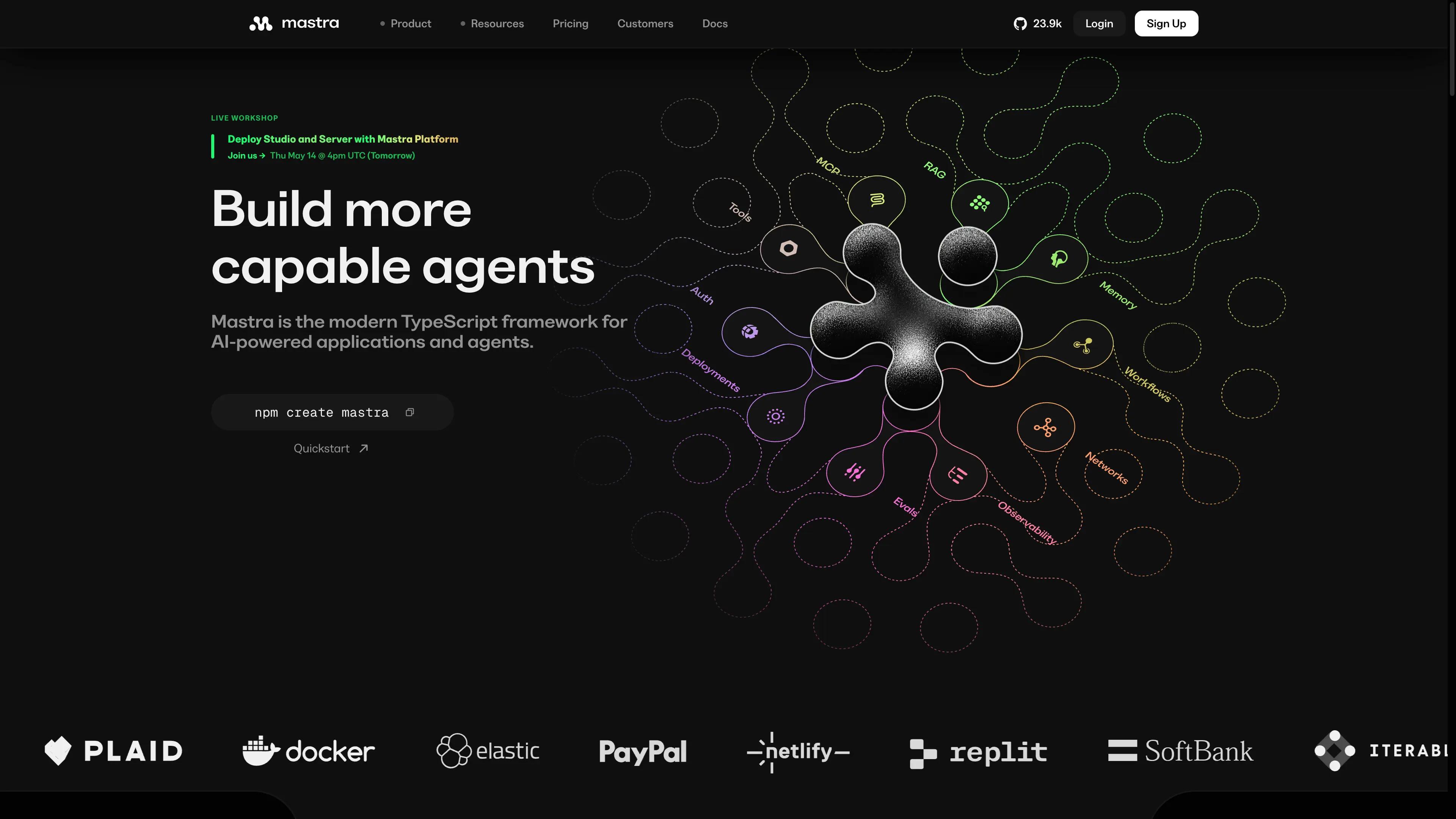
Quick overview: Mastra is an open-source TypeScript framework for building AI agents, workflows, and RAG pipelines, from the team behind Gatsby.js. It ships with agents, memory, evals, human-in-the-loop, and a unified router for 40+ model providers. Mastra Studio adds a local UI for tracing and tuning, with optional Mastra Cloud for hosted deployment.
Best for: TypeScript developers building production agents in their existing Node.js stack
Pros:
TypeScript-native with Zod schemas All-in-one agent primitives Deploy anywhere Node runs
Cons:
TypeScript-only Younger ecosystem than LangChain
Pricing:
Open source; Cloud Starter free; Teams from $250/month
3. LangChain, Modular open source agent framework
Quick overview: LangChain is a open-source framework for developers building complex multi-model AI applications. It offers modular components for retrieval, memory, and orchestration, supported by a vast ecosystem of integrations. While strong, it requires engineering resources for hosting, scaling, and ongoing maintenance.
Best for: Developers building custom multi-model agent workflows
Pros:
Modular components and broad ecosystem Flexible RAG and memory integrations Supports multiple LLMs and toolchains
Cons:
Steep learning curve Requires self-hosting and maintenance
Pricing: Free tier; paid plans starting from $39/month
4. OpenAI Agents SDK / Assistants, GPT-centric agent APIs
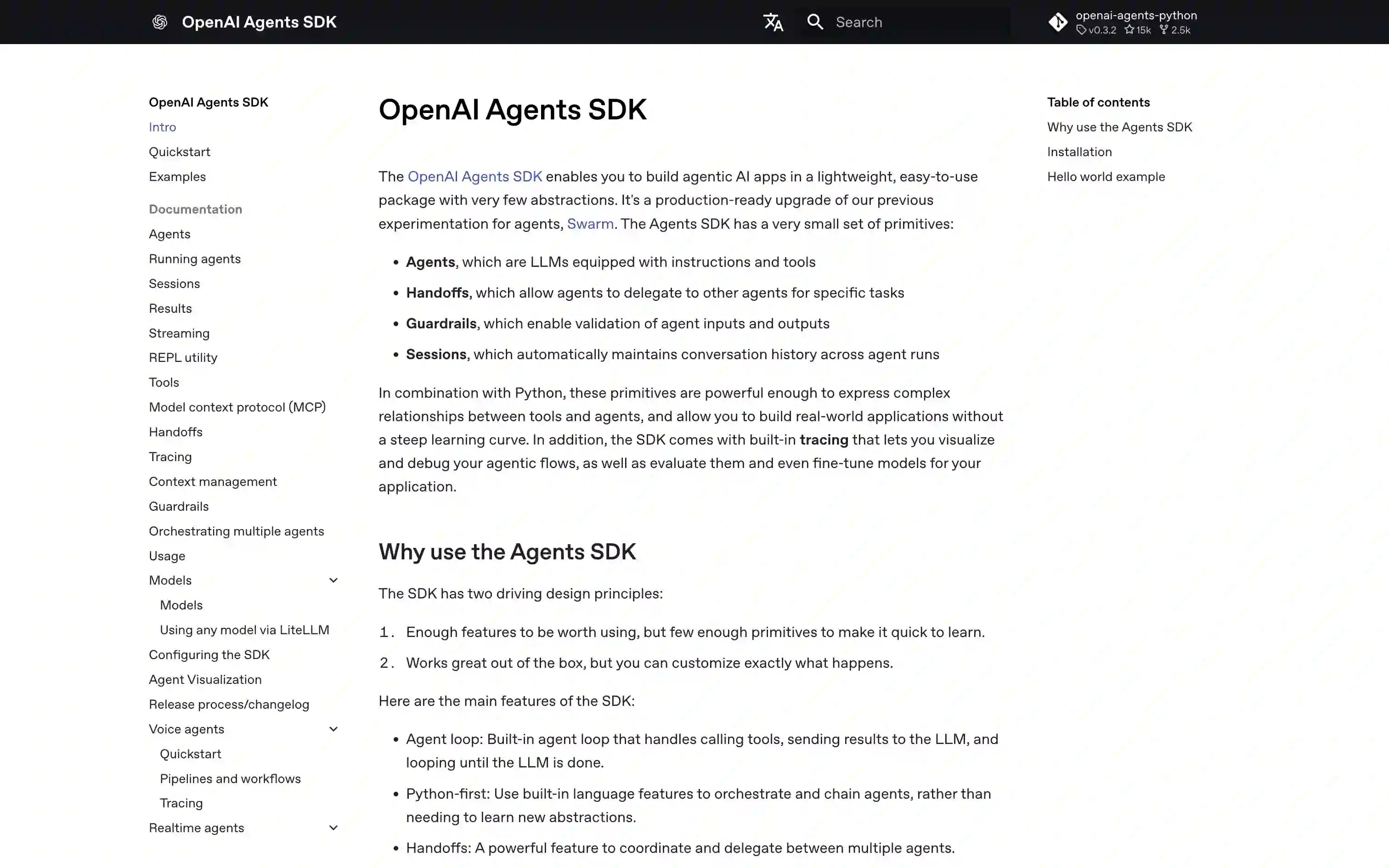
Quick overview: OpenAI’s SDK provides a streamlined way to build GPT-powered assistants with function calling, memory, and safety guardrails. It focuses on simplicity and rapid prototyping, with smooth upgrades as OpenAI’s models evolve. The trade-off is vendor lock-in and usage-based costs.
Best for: Fast prototyping of GPT-powered assistants with tool/function calling
Pros:
Smooth model upgrades Easy tool/function integration Strong guardrails and safety features
Cons:
Tied to OpenAI models Usage-based costs can add up
Pricing: Usage-based (API metered)
5. AutoGen, Open source multi-agent orchestration
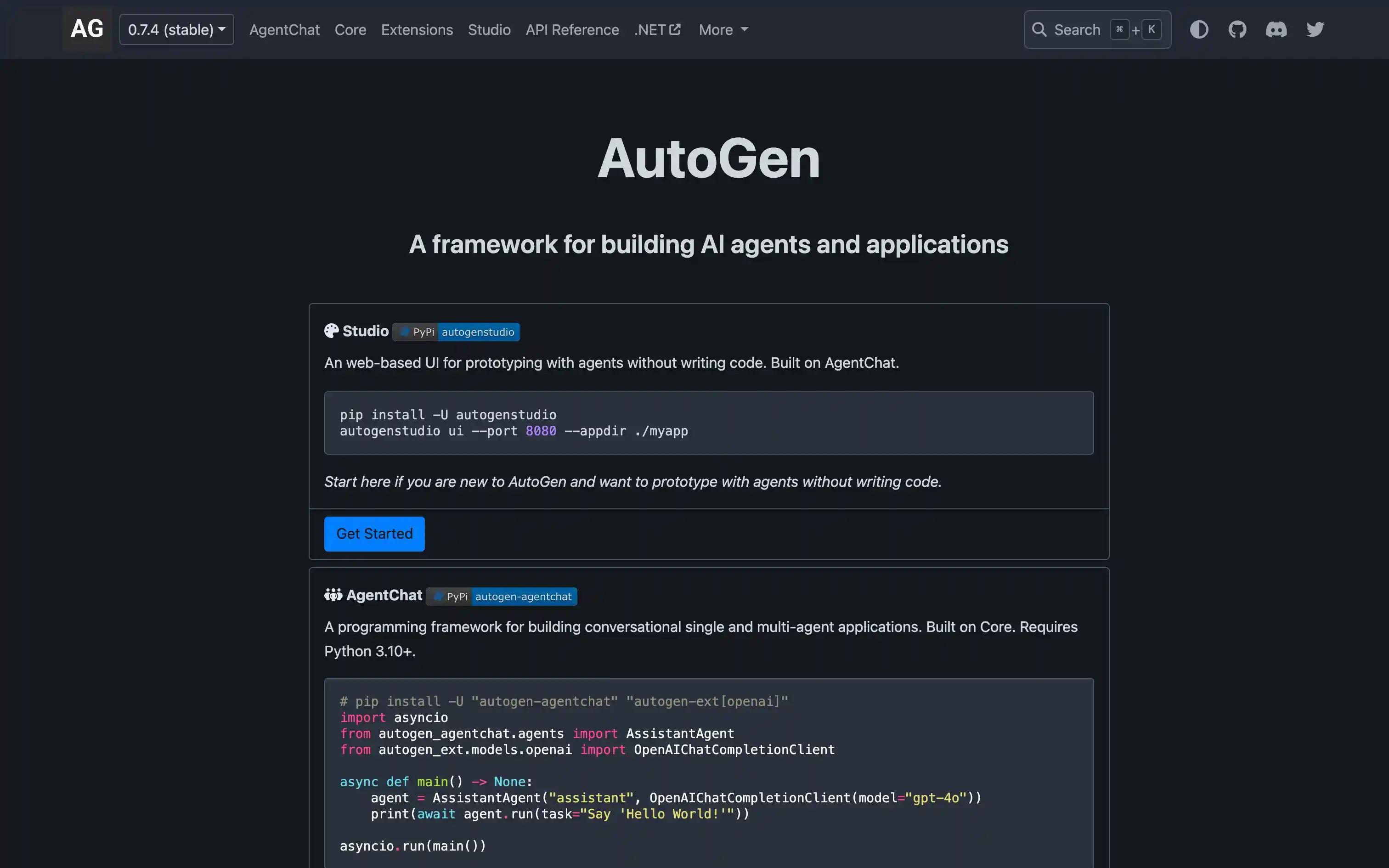
Quick overview: AutoGen is an open-source framework built for orchestrating multiple agents that can collaborate, communicate, and reflect. It’s popular in research and advanced use cases where experimentation with agent-to-agent loops is critical. However, it lacks enterprise-grade governance and requires significant engineering to productionize.
Best for: Research and advanced agent-to-agent collaboration
Pros:
Agent-to-agent communication patterns Self-reflection and feedback loops Open source and extensible
Cons:
Limited enterprise features Requires engineering resources
Pricing: Free (open source)
6. CrewAI, Visual team of agents platform
Quick overview: CrewAI specializes in designing teams of role-based agents through a visual workflow interface. It helps teams prototype and deploy collaborative agent flows quickly, without heavy coding. While easy to use, advanced observability and governance features are limited.
Best for: Designing collaborative agent teams with roles
Pros:
Visual workflow builder Role-based agent collaboration Quick prototyping
Cons:
Limited advanced observability Freemium model restricts some features
Pricing: Enterprise only.
7. n8n, Automation platform with AI agent plugins
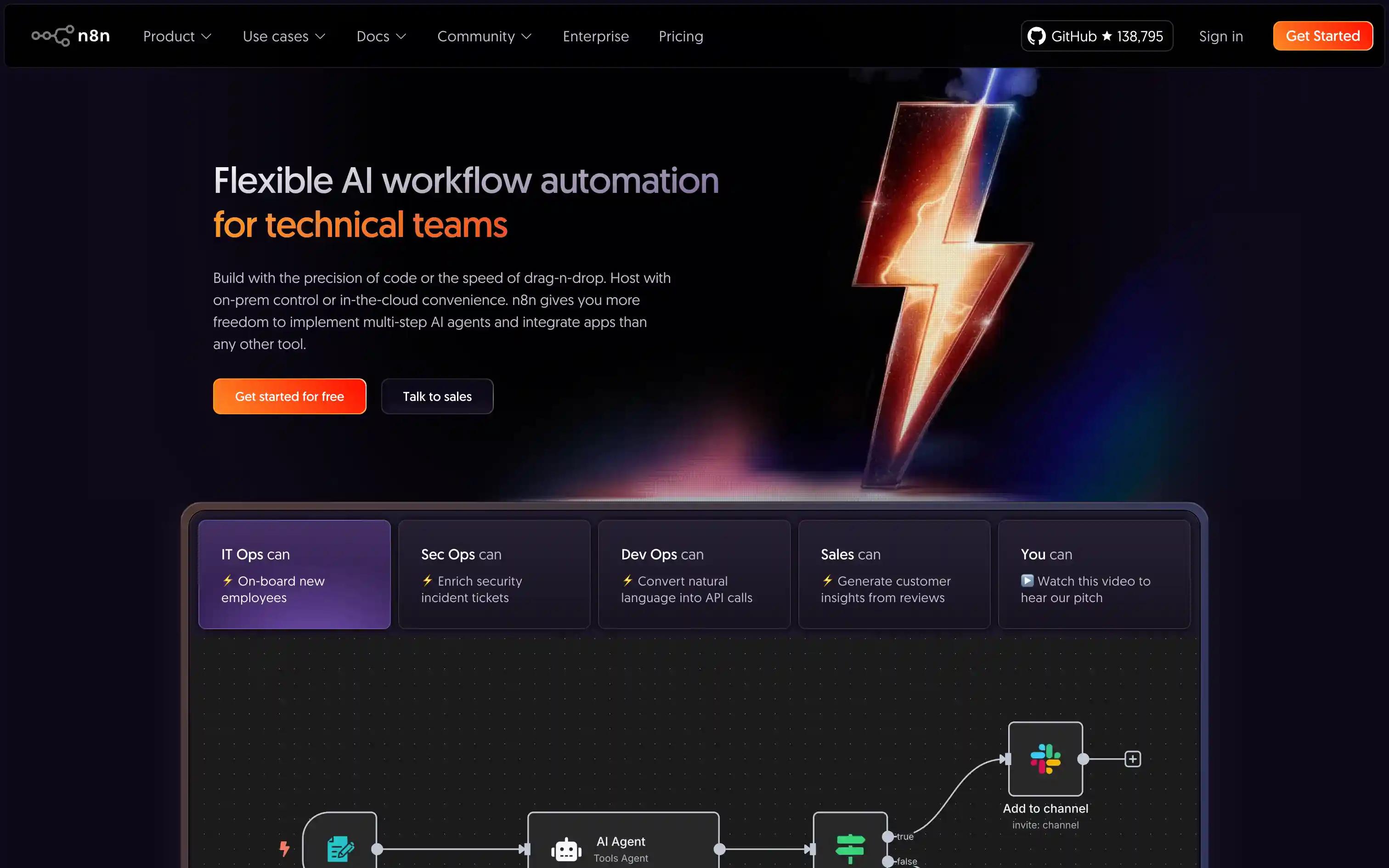
Quick overview: n8n is an open-source automation platform that combines AI agents with traditional SaaS workflows. With a low-code visual builder and hundreds of integrations, it’s a versatile option for both developers and operations teams. It can run self-hosted or in the cloud, though advanced AI features often require scripting.
Best for: Workflow automation integrating AI and traditional apps
Pros:
Visual low-code interface Large library of integrations Self-hosting option
Cons:
Not AI-focused by default Advanced features may need scripting
Pricing: Free (open source); cloud from $20/month
8. Zapier, No-code automation with AI integrations
Quick overview: Zapier is a no-code automation leader that connects thousands of apps, now with AI integrations. It’s designed for business users to quickly set up workflows without technical expertise. While great for simple automations, it lacks deep agent orchestration capabilities.
Best for: Non-technical users automating tasks with AI and SaaS tools
Pros:
Extensive app ecosystem Simple no-code builder Fast setup
Cons:
Limited agent orchestration Usage caps on free/low tiers
Pricing: Free tier; paid plans from $19.99/month
9. Lindy AI, Personal AI assistant platform
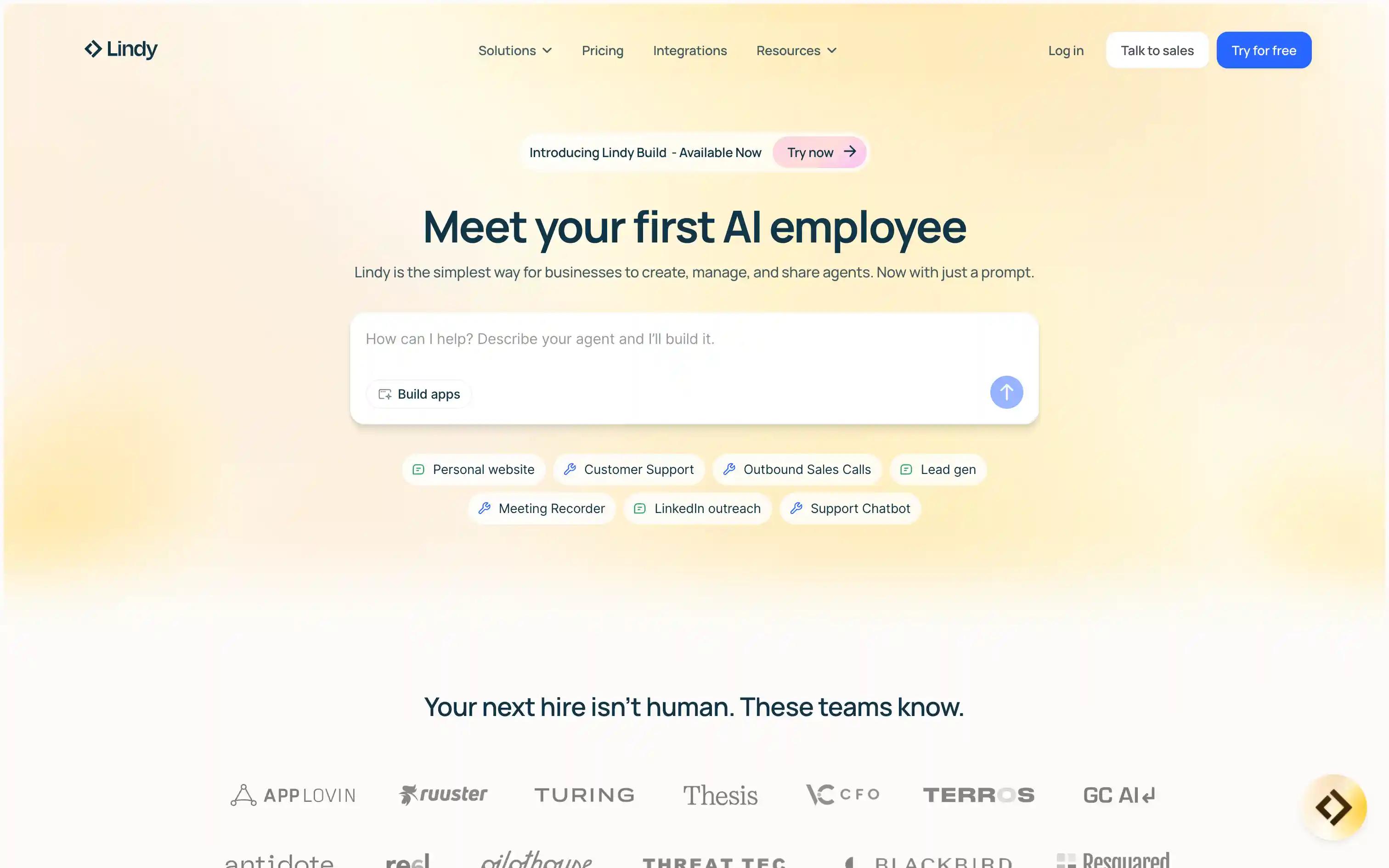
Quick overview: Lindy AI focuses on personal and business assistants, offering customizable templates for common workflows. Its platform aims to make AI-driven productivity accessible to non-technical users. The trade-off is limited flexibility for complex multi-agent logic.
Best for: Automating personal and business workflows with AI
Pros:
Prebuilt assistant templates Customizable workflows Easy onboarding
Cons:
Less flexible for complex agent logic Usage-based pricing
Pricing: Starts at $25/month
10. Gumloop, Visual LLM agent builder
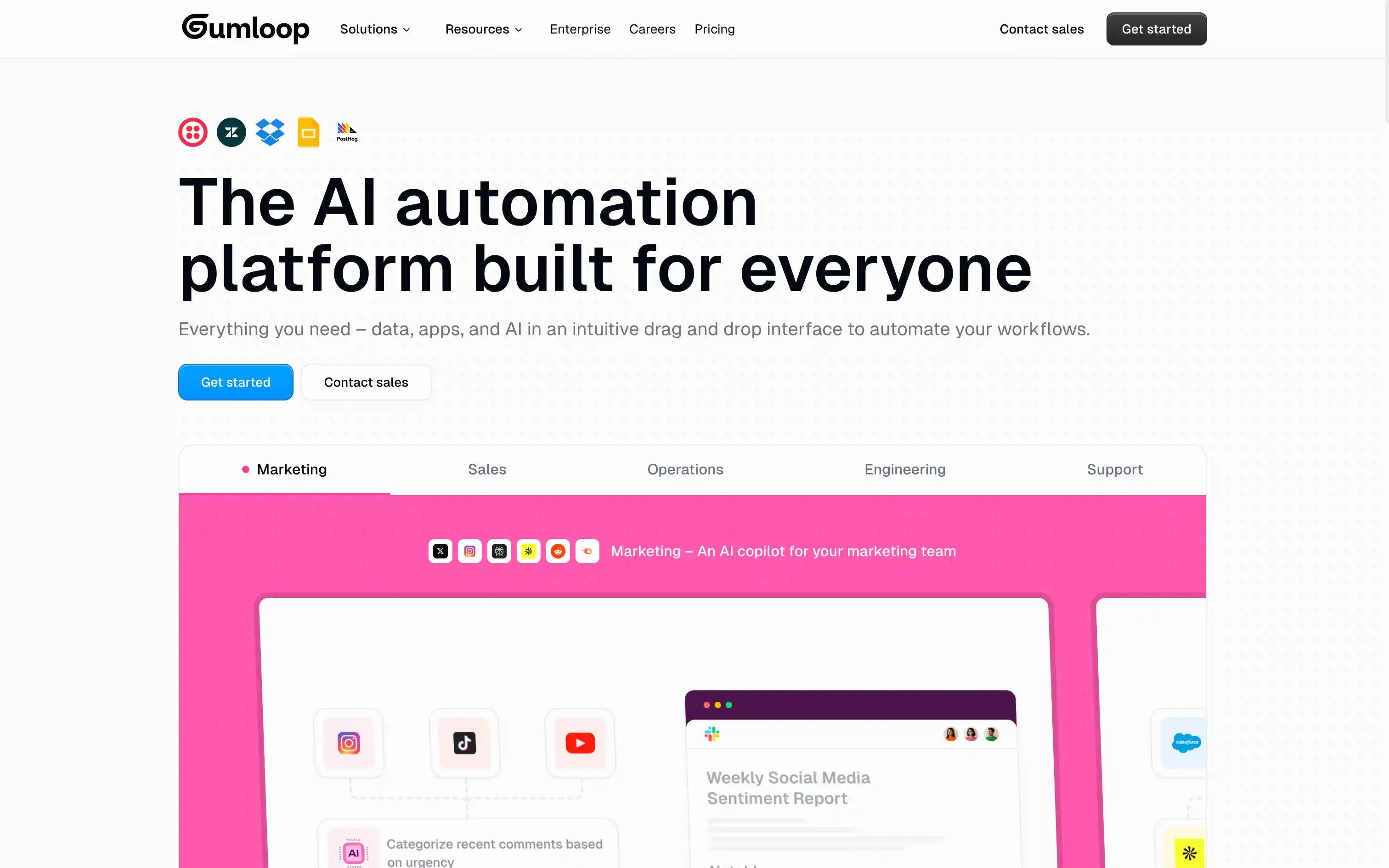
Quick overview: Gumloop is a lightweight visual builder for prototyping LLM-powered agents. Its drag-and-drop interface and templates make iteration fast, appealing to startups and builders experimenting with AI. Scaling and customization options are more limited compared to enterprise frameworks.
Best for: Rapid prototyping of LLM-powered agents
Pros:
Drag-and-drop interface Built-in templates Fast iteration
Cons:
Limited deep customization Scaling options limited
Pricing: Free tier; paid plans from $37/month
11. Stack AI, Low-code AI workflow platform
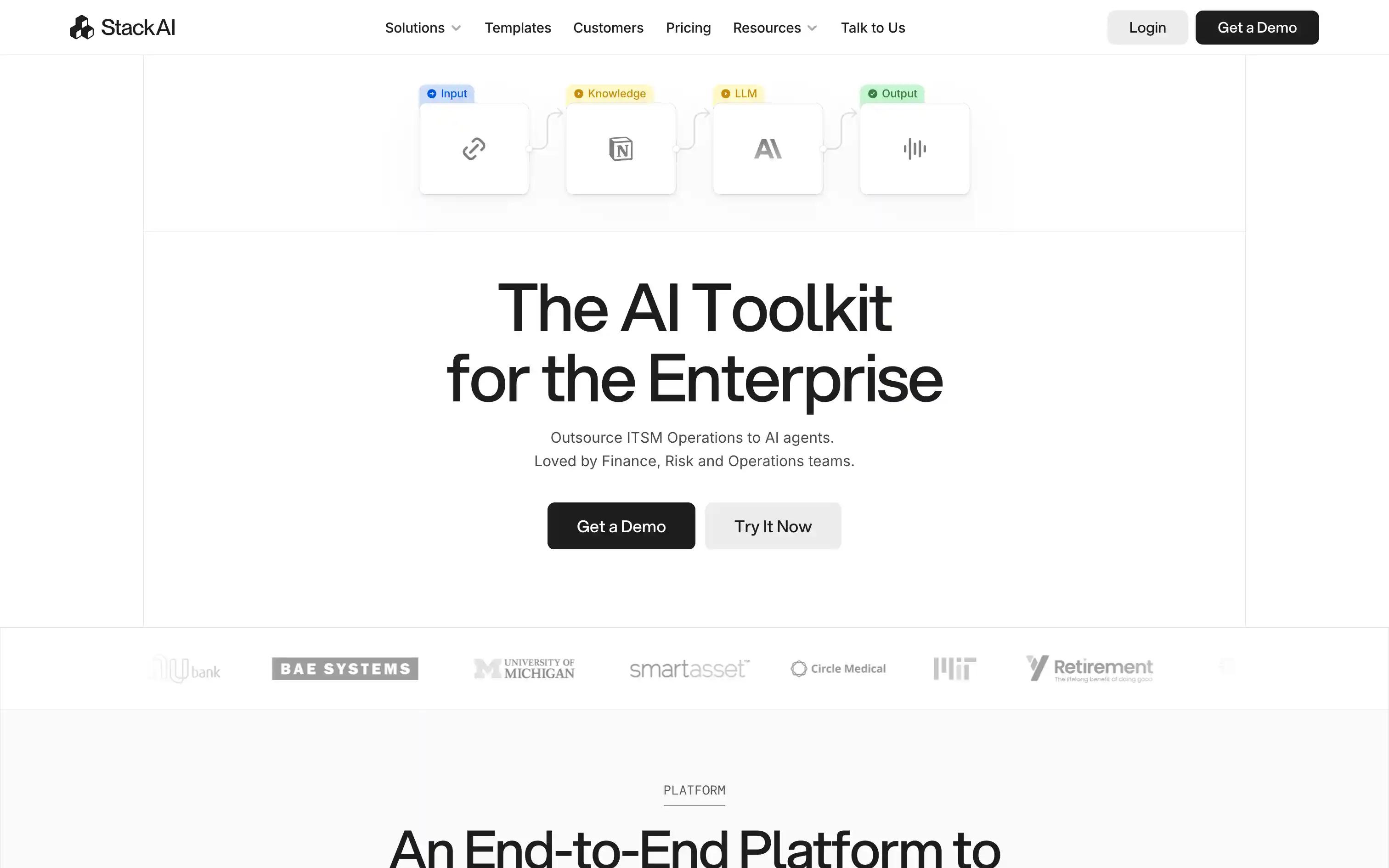
Quick overview: Stack AI provides a low-code platform for building AI-powered automations and workflows. It combines a visual editor with API integrations, enabling quick deployment of business-focused agents. More advanced collaboration and observability features may require custom coding.
Best for: Building AI-powered automations with minimal code
Pros:
Visual workflow editor API integrations Quick deployment
Cons:
Limited agent collaboration features Some advanced features require coding
Pricing: Free tier; Enterprise plan
AI agent frameworks comparison table
Quick recommendations
Building one personal or operator-level assistant with persistent memory and native surfaces: choose Vellum. TypeScript developers building production agents in Node.js: choose Mastra. Building deep custom logic with multiple models and tools: choose LangChain. Prototyping GPT assistants fast with built-in guardrails: choose OpenAI Agents SDK. Researching multi-agent self-reflection loops: choose AutoGen. Designing role-based teams visually: choose CrewAI. Connecting apps and AI in low-code workflows: choose n8n or Zapier.
FAQs
1) What is the fastest path from prototype to production for AI agents?
If you want evaluations, versioning, and rollback out of the box, a managed framework is usually fastest. Code-only stacks like LangChain or AutoGen give you maximum control but you will need to wire up infra, logging, and governance yourself. Managed picks like Mastra, CrewAI, or Stack AI accelerate this path because they ship with evals, observability, and deployment tooling included.
2) Should my team choose a code-first framework or a visual builder?
Code-first frameworks like LangChain and AutoGen are ideal when you need deep customization and are comfortable owning infra. Visual and low-code platforms like Mastra, CrewAI, and Stack AI speed collaboration and review. Many engineering teams end up in a hybrid model: SDKs for core logic with a shared visual layer for stakeholder review.
3) How do we keep prompt or model changes from breaking production?
You need three things: versioning, eval gates, and safe rollout. In any stack, you should version prompts, tools, and models, run evals on changes, and ship via canary or environment promotion. Managed frameworks bake this directly into the platform; with OSS stacks you build the discipline into your CI.
4) Which AI agent frameworks are best for multi-agent setups?
For experimentation with agent-to-agent patterns, AutoGen and CrewAI are popular choices. They are strong for research and early exploration. If you want multi-agent behavior plus production-grade observability and governance, a managed framework is typically safer since you do not have to assemble that tooling yourself.
5) We are in a regulated environment. What should we prioritize in an agent framework?
Look for RBAC, audit logs, environment separation, data residency options, and human-in-the-loop controls. Open-source frameworks can support this, but you will need to add custom tooling. Managed enterprise picks like Stack AI or Dust are designed with these needs in mind from day one.
6) What observability signals matter most when debugging AI agents?
The big ones are step-level traces, input and output snapshots with redaction, tool call results, latency, token usage, and eval outcomes tied to real KPIs. You can stitch this together with custom logging and tracing on any stack. Managed platforms surface these as first-class signals so debugging stays fast as agent volume grows.
7) How can we control LLM spend as traffic grows?
You want routing and guardrails. Use cheaper models for simple paths, caching for repeated queries, strict timeouts on tools, and token budgets per workflow or tenant. Most frameworks can support this pattern if you are willing to build the logic. Managed platforms often expose per-route cost controls out of the box.
8) When is open source the better starting point for agent frameworks?
Open-source frameworks like LangChain, Mastra, and n8n are great if you need very deep customization, prefer full self-hosting control, or are still validating your approach with a small team. You trade faster onboarding and governance features for flexibility and low initial cost. As reliability and compliance expectations grow, many teams graduate to a managed platform to avoid owning everything themselves.
9) How do we know if an AI agent framework is truly production ready?
Check for four things:
Strong observability (traces, logs, metrics, and evals) Governance (RBAC, audit logs, secrets, environments) Clear deployment story (cloud, VPC, or on-prem, plus CI hooks) Multi-team workflows (support for PMs, QA, and compliance)
Managed frameworks are designed with these in mind, while many early-stage tools focus mostly on prototyping.
10) How can developers let PMs and non-technical teammates contribute without losing control?
Use a shared canvas where PMs and SMEs can adjust flows, write instructions, and review changes, while core logic and integrations stay in code and SDKs. Visual builders like Mastra, CrewAI, and Stack AI are built around this split: developers own the SDK and custom nodes, while stakeholders collaborate in the visual layer.
11) What is a pragmatic 30-day plan to prove value with AI agent frameworks?
A simple, repeatable plan:
Week 1: Pick one high-impact use case and define evals and KPIs. Week 2: Implement the agent, wire logging, and run an internal pilot. Week 3: Add guardrails, alerts, and regression checks based on pilot feedback. Week 4: Run a canary rollout, monitor closely, then expand if metrics hold.
Extra Resources
The 2026 Guide to AI Agent Workflows →
The Ultimate LLM Agent Build Guide →
Top low-code AI workflow automation tools →
Top 13 AI Agent Builder Platforms for Enterprises →
Top 12 AI Workflow Platforms →
Citations
[1] Google Cloud. (2025). Agent2Agent protocol is getting an upgrade .
[2] KPMG. (2025). Ten Key Regulatory Challenges: 2025 Mid-Year .
[3] Forrester. (2025). The State Of Low-Code, Global 2025 .
[4] OpenLogic. (2025). 2025 State of Open Source Report .
[5] Productive/edge. (2025). Gartner’s Top 10 Tech Trends Of 2025: Agentic AI and Beyond .